What is Endolaser Saphenous Ablation for Varicose Veins?
Endolaser Saphenous Ablation (EVLA) is a minimally invasive procedure treating varicose veins by sealing the problematic saphenous vein. It uses laser energy to close the vein from within, redirecting blood flow to healthy veins. This modern technique effectively addresses the root cause of venous insufficiency, offering a fast recovery without hospitalization.
Medically Reviewed by Dr. Rafael Henrique Rodrigues Costa
How does Endolaser Saphenous Ablation treat chronic venous insufficiency?
Resumo: Endolaser Saphenous Ablation treats chronic venous insufficiency by targeting the incompetent saphenous vein. This vein, often the root cause of varicose veins, fails to return blood efficiently to the heart. The laser energy heats and collapses the vein walls, permanently sealing it. Blood then reroutes through healthy veins, improving circulation and symptoms.
Chronic venous insufficiency (CVI) affects millions globally, characterized by inefficient blood return to the heart from the legs. This condition often stems from damaged valves in the saphenous veins, leading to blood pooling and increased pressure. This venous hypertension causes symptoms like pain, swelling, and the visible appearance of varicose veins.
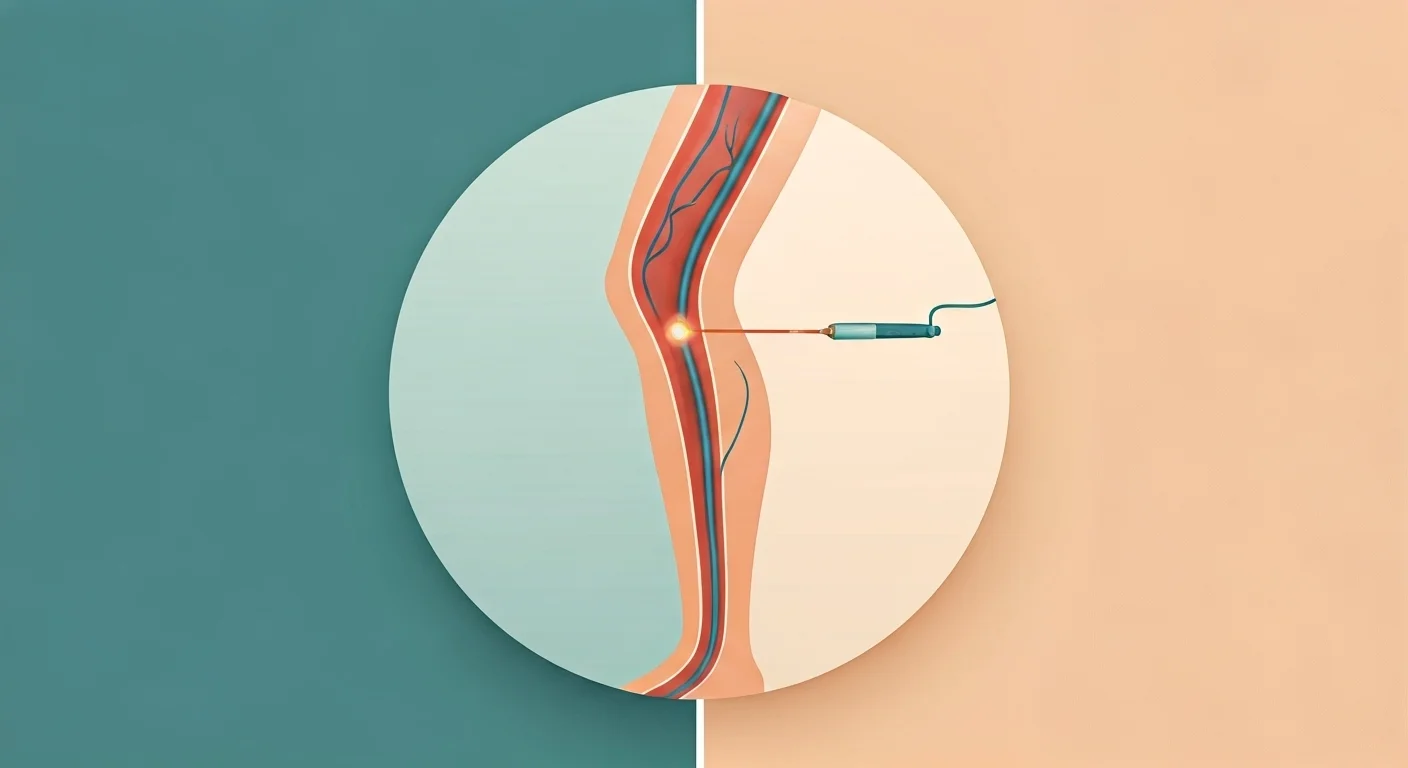
Endolaser Saphenous Ablation directly addresses this underlying issue. A thin laser fiber is inserted into the diseased vein, typically the Great Saphenous Vein (GSV). As the fiber is slowly withdrawn, controlled laser energy is emitted, heating the vein wall. This heat causes the vein to contract, collapse, and seal shut.
Once the diseased vein is closed, the body naturally reroutes blood flow through healthier, functional veins. This restores proper venous circulation in the leg, reducing symptoms associated with CVI. According to the European Society for Cardiology (ESC) 2022 guidelines, endovenous thermal ablation is recommended as a first-line treatment for saphenous vein incompetence, reflecting its proven efficacy.
Who is a suitable candidate for Endolaser treatment?
Resumo: Suitable candidates for Endolaser treatment typically present with symptomatic varicose veins caused by saphenous vein incompetence. Patients experiencing leg pain, swelling, fatigue, skin changes, or even venous ulcers due to reflux are often good candidates. A thorough vascular ultrasound examination by Dr. Rafael Costa helps confirm the diagnosis and suitability for the procedure.
Determining suitability for Endolaser Saphenous Ablation requires a comprehensive medical evaluation. Patients often seek treatment due to uncomfortable symptoms or cosmetic concerns related to varicose veins. Key indicators for Endolaser include:
- Symptomatic Varicose Veins: Individuals experiencing leg pain, heaviness, aching, cramping, itching, or restless legs, especially after prolonged standing.
- Chronic Venous Insufficiency: Diagnosis of CVI, particularly when ultrasound reveals reflux in the great or small saphenous veins.
- Skin Changes: Presence of skin discoloration (pigmentation), eczema, or lipodermatosclerosis around the ankles, classified as C4a or C4b in the CEAP system.
- Venous Ulcers: Patients with active or healed venous ulcers (C5 or C6) often benefit from addressing underlying saphenous reflux.
Dr. Rafael Costa performs a detailed clinical assessment and a vascular Doppler ultrasound at SoulClin in Belo Horizonte. This diagnostic imaging precisely maps the venous anatomy and identifies incompetent valves, guiding the treatment plan. Patients with certain conditions, such as severe arterial disease or acute deep vein thrombosis, may require alternative treatments.
What does the Endolaser procedure involve?
Resumo: The Endolaser procedure is performed on an outpatient basis, usually under local anesthesia. Dr. Rafael Costa uses ultrasound guidance to insert a thin laser fiber into the affected saphenous vein. Laser energy is then delivered as the fiber is slowly withdrawn, sealing the vein. The entire process typically takes less than an hour, minimizing patient discomfort.
The Endolaser Saphenous Ablation procedure is a streamlined, minimally invasive process designed for patient comfort and rapid recovery. Here's a general overview of what to expect:
- Preparation: Upon arrival at SoulClin in Belo Horizonte, the patient's leg is prepared. Dr. Rafael Costa will review the ultrasound mapping of the vein. Local anesthesia is administered along the path of the diseased vein, ensuring minimal discomfort during the procedure.
- Access: A very small incision or puncture is made, usually near the knee or ankle. Using continuous ultrasound guidance, a thin catheter is inserted into the target saphenous vein.
- Laser Fiber Insertion: A delicate laser fiber is threaded through the catheter, positioned precisely at the top of the incompetent vein, just below the groin.
- Vein Ablation: As the laser fiber is slowly pulled back, laser energy is emitted, heating the vein wall and causing it to collapse and seal. Dr. Rafael Costa meticulously monitors this process with ultrasound to ensure effective and safe ablation.
- Completion: Once the vein is fully treated, the laser fiber and catheter are removed. The small entry point is covered with a sterile dressing. Compression stockings are immediately applied to the treated leg.
The procedure typically lasts between 30 to 60 minutes, depending on the length and complexity of the vein being treated. Patients can usually walk immediately afterward and return home the same day.
What are the key benefits of Endolaser treatment for varicose veins?
Resumo: Endolaser treatment offers numerous benefits over traditional surgery. It is a minimally invasive outpatient procedure, meaning no hospital stay is required. Patients experience less pain, minimal scarring, and a quicker return to daily activities. The high success rates, often exceeding 95% at five years, also make it a highly effective long-term solution.
Endolaser Saphenous Ablation has become a preferred treatment for varicose veins due to its significant advantages:
- Minimally Invasive: Unlike traditional vein stripping surgery, Endolaser requires only a tiny incision, leading to less trauma, reduced pain, and virtually no scarring. Dr. Rafael Costa specializes in these micro-invasive techniques at SoulClin.
- Outpatient Procedure: The treatment is performed in the clinic setting, allowing patients to go home the same day. This eliminates the need for hospital admission and general anesthesia, reducing associated risks and costs.
- Rapid Recovery: Most patients can resume light activities immediately and return to work within a few days. The recovery period is significantly shorter compared to conventional surgical methods.
- High Efficacy: Studies demonstrate excellent long-term results. Endovenous thermal ablation methods, including Endolaser, achieve vein occlusion rates above 95% at five years. This effectively treats the root cause of varicose veins, minimizing recurrence.
- Improved Aesthetics and Symptoms: Patients report significant relief from symptoms like pain, swelling, and heaviness. The disappearance of prominent varicose veins also leads to improved cosmetic appearance.
- Safety Profile: When performed by an experienced vascular surgeon like Dr. Rafael Costa, Endolaser is a safe procedure with a low incidence of complications.
What is the typical recovery process after Endolaser ablation?
Resumo: Recovery after Endolaser ablation is generally quick and straightforward. Patients are encouraged to walk immediately after the procedure to promote circulation. Compression stockings must be worn for several days to weeks as advised by Dr. Rafael Costa. Most individuals can resume normal, light activities within one to two days, with full recovery within a few weeks.
The post-procedure phase following Endolaser Saphenous Ablation is crucial for optimal results and typically involves minimal downtime.
- Immediate Post-Procedure: Patients are encouraged to walk for 20-30 minutes immediately after the procedure. This helps prevent blood stasis and promotes healthy circulation. A compression stocking is applied to the treated leg and should be worn continuously for the first 24-48 hours, then during waking hours for a period recommended by Dr. Rafael Costa, usually one to two weeks.
- Pain Management: Most patients experience mild discomfort, aching, or tightness in the treated leg. Over-the-counter pain relievers are usually sufficient to manage this. Dr. Rafael Costa will provide specific instructions for pain management.
- Activity Restrictions: While light activity is encouraged, strenuous exercise, heavy lifting, and prolonged standing or sitting should be avoided for about a week. Patients can typically return to most normal daily activities, including work, within 1-3 days, depending on their profession.
- Follow-up: A follow-up visit with Dr. Rafael Costa at SoulClin, including a Doppler ultrasound, is typically scheduled within one to two weeks to confirm vein closure and assess recovery. This ensures the treated vein remains sealed and monitors for any potential issues.
- Bruising and Tenderness: Some bruising and tenderness along the treated vein path are common and usually resolve within a few weeks. These are normal parts of the healing process as the body absorbs the treated vein.
Are there any potential risks or complications with Endolaser?
Resumo: Like any medical procedure, Endolaser carries potential risks, though they are generally low. These can include temporary bruising, swelling, or tenderness. More rare complications might involve nerve irritation, skin burns, or deep vein thrombosis. Dr. Rafael Costa discusses all potential risks thoroughly with patients, emphasizing patient safety and utilizing advanced techniques to minimize concerns.
While Endolaser Saphenous Ablation is considered a safe and effective procedure, it is important to be aware of potential, albeit rare, risks and complications. Dr. Rafael Costa prioritizes patient safety at SoulClin, employing advanced ultrasound guidance and sterile techniques to mitigate these possibilities.
Common and usually temporary side effects include:
- Bruising and Swelling: Mild to moderate bruising and swelling along the treated vein are common and typically resolve within a few weeks.
- Tenderness and Discomfort: Patients may feel a pulling sensation or tenderness along the treated vein, which usually responds well to over-the-counter pain medication.
Less common, but more significant, complications can include:
- Nerve Injury: Although rare, superficial nerves close to the saphenous vein can be irritated, leading to temporary numbness or tingling in a small area of the skin. Permanent nerve damage is exceedingly rare.
- Skin Burns: Very rarely, if the laser energy is not properly contained within the vein, a small skin burn may occur. Advanced techniques and careful application of local anesthetic with tumescent solution greatly reduce this risk.
- Deep Vein Thrombosis (DVT): The risk of developing DVT is very low (less than 1%) with Endolaser. Early ambulation and compression therapy help to minimize this risk. Dr. Rafael Costa evaluates each patient's individual risk factors.
- Infection: As with any procedure involving a skin puncture, there is a minimal risk of infection, which is managed with strict aseptic techniques.
Dr. Rafael Costa ensures patients are fully informed about these potential risks and takes every precaution to ensure a safe procedure and successful outcome.
How does Endolaser compare to traditional varicose vein surgery?
Resumo: Endolaser offers significant advantages over traditional varicose vein surgery, such as vein stripping. Traditional surgery involves larger incisions, general anesthesia, and a hospital stay, with a longer, more painful recovery. Endolaser is minimally invasive, performed under local anesthesia as an outpatient procedure, resulting in less pain, minimal scarring, and a much faster return to normal activities.
Historically, surgical stripping of the saphenous vein was the primary treatment for severe varicose veins. While effective, it involved a more invasive approach with significant patient impact. Endolaser Saphenous Ablation represents a significant advancement in vascular care.
Here's a comparison:
| Feature | Endolaser Saphenous Ablation | Traditional Vein Stripping Surgery |
| :------------------- | :------------------------------------------------------ | :------------------------------------------------------- |
| Invasiveness | Minimally invasive (small puncture) | More invasive (incisions in groin and ankle) |
| Anesthesia | Local anesthesia (sometimes sedation) | General or spinal anesthesia |
| Hospital Stay | Outpatient (go home same day) | Typically requires hospital stay (1-2 days) |
| Pain Level | Mild discomfort, manageable with OTC pain relievers | Moderate to severe pain, often requiring stronger medication |
| Scarring | Minimal to no visible scarring | Visible scars at incision sites |
| Recovery Time | Rapid (return to light activity in 1-2 days) | Longer (several weeks for full recovery) |
| Efficacy | High (occlusion rates >95% at 5 years) | High, but with more patient discomfort and recovery time |\
Dr. Rafael Costa at SoulClin focuses on minimally invasive treatments like Endolaser, providing patients in Belo Horizonte with effective solutions that prioritize comfort and swift recovery. This aligns with current evidence-based guidelines recommending endovenous thermal ablation as the first-line treatment for saphenous vein incompetence.
Why choose Dr. Rafael Costa at SoulClin for Endolaser treatment in Belo Horizonte?
Resumo: Choosing Dr. Rafael Costa for Endolaser treatment means entrusting your care to a highly experienced vascular surgeon in Belo Horizonte. With over 15,000 procedures performed, Dr. Costa combines advanced technology with a patient-centered approach. He ensures clear explanations and individualized treatment plans based on evidence, prioritizing comfort and optimal outcomes at SoulClin.
When considering Endolaser Saphenous Ablation, the expertise of your vascular surgeon is paramount. Dr. Rafael Costa brings extensive experience and a commitment to advanced, patient-focused care to SoulClin in Belo Horizonte.
- Proven Expertise: Dr. Rafael Costa has more than a decade of experience in vascular surgery, having performed over 15,000 vascular procedures. This vast experience ensures precision and confidence in complex cases.
- Minimally Invasive Focus: His specialization in micro-invasive techniques, including Endolaser, means patients benefit from the latest, most comfortable, and effective treatments available.
- Patient-Centered Philosophy: Dr. Costa's approach emphasizes active listening, clear explanations, and shared decision-making. He ensures every patient understands their condition and treatment options, fostering trust and confidence.
- Advanced Technology: SoulClin is equipped with state-of-the-art ultrasound guidance, crucial for the precise and safe execution of Endolaser procedures.
- Evidence-Based Care: All treatment recommendations are grounded in the latest international guidelines and scientific evidence, ensuring high-performance, individualized care.
At SoulClin, Dr. Rafael Costa provides comprehensive evaluation and personalized treatment plans for varicose veins and chronic venous insufficiency. His dedication to innovation and humanized care makes him a trusted choice for Endolaser treatment in the Belo Horizonte region.
Frequently Asked Questions
Is Endolaser treatment painful?
Most patients report minimal pain during Endolaser treatment due to local anesthesia. Some may feel a mild pulling or pressure sensation. After the procedure, discomfort is typically mild and managed with over-the-counter pain relievers. Dr. Rafael Costa prioritizes patient comfort, ensuring a smooth and tolerable experience at SoulClin in Belo Horizonte.
How long does it take to recover from Endolaser?
Recovery from Endolaser is typically rapid. Most patients can walk immediately after the procedure and resume light daily activities within 1-2 days. Strenuous exercise should be avoided for about a week. Full recovery, with any bruising and tenderness subsiding, usually occurs within a few weeks. Follow-up is essential to monitor progress.
Will my varicose veins return after Endolaser?
Endolaser treatment has a high success rate, with occlusion rates often exceeding 95% at five years. This effectively treats the underlying cause of varicose veins. While new varicose veins can develop over time in other areas due to the progressive nature of venous disease, the treated saphenous vein is permanently sealed. Regular follow-ups are recommended.
Do I need to stay in the hospital for Endolaser treatment?
No, Endolaser Saphenous Ablation is an outpatient procedure. It is performed in the clinic, typically under local anesthesia, and does not require a hospital stay. Patients can return home the same day after the procedure. This convenience is a significant advantage, allowing for a quicker return to your normal routine.
What is the role of compression stockings after Endolaser?
Compression stockings are essential after Endolaser treatment. They help reduce swelling, minimize bruising, and support the treated vein as it heals. The stockings apply gentle pressure, promoting healthy blood flow and preventing blood pooling. Dr. Rafael Costa will provide specific instructions on how long and when to wear them for optimal recovery.
Can Endolaser treat all types of varicose veins?
Endolaser is highly effective for treating varicose veins caused by incompetence of the great or small saphenous veins, which are the main superficial veins. For smaller spider veins or reticular veins, other treatments like CLaCS or sclerotherapy might be more appropriate. A thorough evaluation by Dr. Rafael Costa will determine the best treatment plan for your specific condition.
How soon can I exercise after Endolaser?
Light walking is encouraged immediately after Endolaser treatment to promote circulation. However, strenuous activities, heavy lifting, and high-impact exercises should be avoided for approximately one week. Dr. Rafael Costa will provide personalized recommendations based on your individual healing process. Always listen to your body and follow your surgeon's advice.
Is Endolaser covered by health insurance?
Coverage for Endolaser treatment by health insurance plans often depends on the medical necessity of the procedure. If your varicose veins are causing significant symptoms or complications, it is more likely to be covered. We recommend contacting your insurance provider directly and discussing your specific case with Dr. Rafael Costa's team at SoulClin for guidance.
What is the difference between Endolaser and Radiofrequency Ablation?
Both Endolaser (EVLA) and Radiofrequency Ablation (RFA) are effective endovenous thermal ablation techniques. Endolaser uses laser energy, while RFA uses radiofrequency energy to heat and seal the diseased vein. Both achieve similar high success rates and offer comparable benefits. Dr. Rafael Costa can determine which method is most suitable for your specific venous anatomy and condition.
How can I prepare for an Endolaser procedure?
To prepare for an Endolaser procedure, follow Dr. Rafael Costa's specific instructions. Generally, this includes avoiding certain medications like blood thinners before the procedure and arranging for transportation home. Ensure your skin is clean, and wear loose, comfortable clothing. Discuss any concerns with the SoulClin team beforehand to ensure you are fully prepared.